Episode Transcript
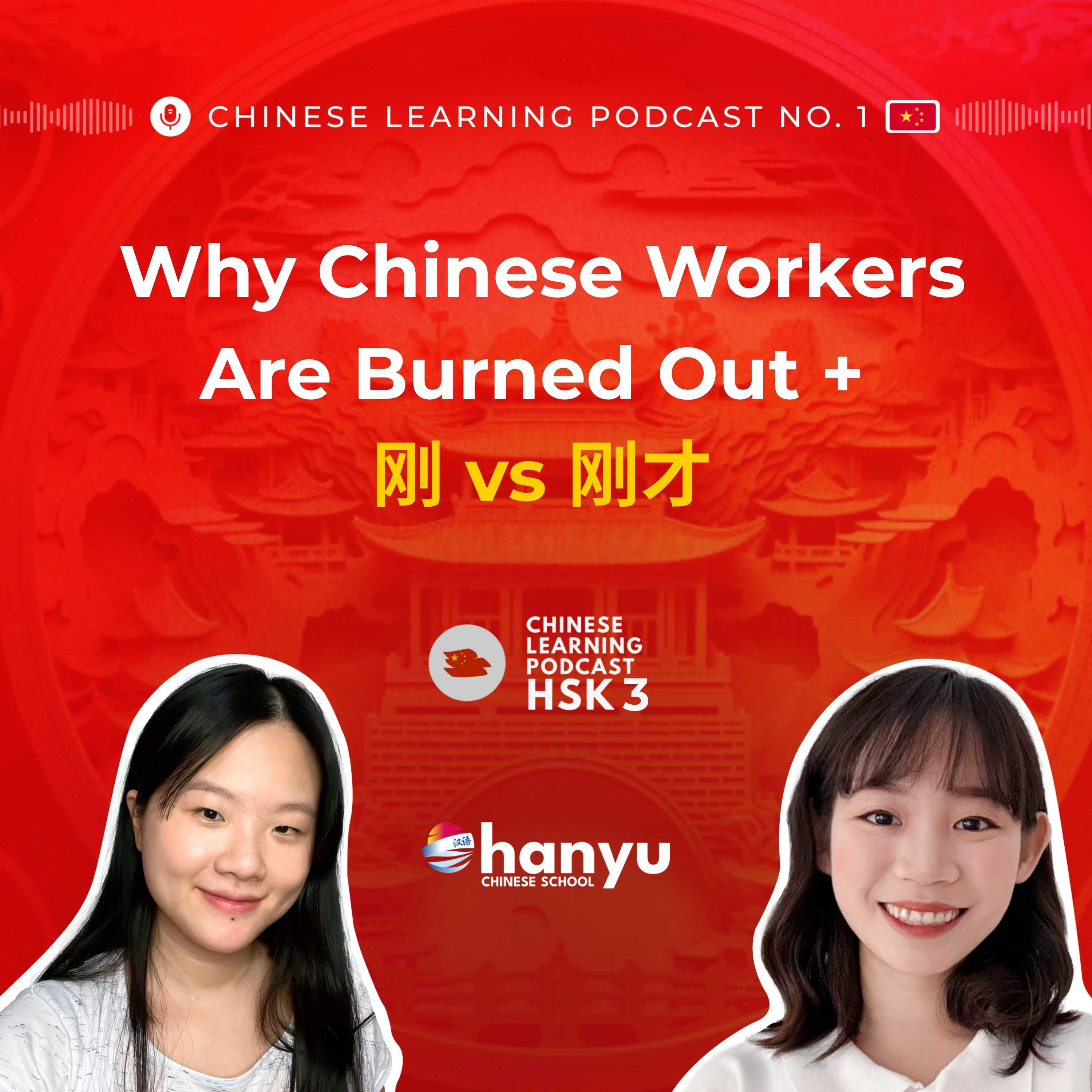
[00:00:09] Speaker A: Why chinese workers are burned out.
[00:00:15] Speaker B: The.
[00:00:15] Speaker A: Truth about modern chinese work culture learning.
[00:00:21] Speaker B: Gansai for just now in chinese.
So.
[00:01:53] Speaker A: How.
[00:02:15] Speaker B: Changing.
[00:02:21] Speaker A: Oh.
[00:02:35] Speaker B: Yes.
[00:02:36] Speaker A: So we're gonna start with the dialogue. So the setting is me and Emily are chatting in the office at after a meeting and a coffee break.
Okay, so after this dialogue, let's dive in into the grammar part.
Both Gan Tai and Gan are used to talk about things that had. That happened very recently.
[00:03:47] Speaker B: Yes, but they are used in different ways and they focus on different things.
So let's take a look.
Which means just now, a moment ago.
So it could be, depending on the speaker, it could be 10 minutes, 30 minutes, nothing more than. I don't think it's something more than an hour.
But of course, if you feel like an hour passed really fast, then that is another case.
But normally it means something that could happen just now, just a moment ago.
So how it works? It is a work time. And then answer the question, when did it happen?
[00:04:27] Speaker A: Yes. So let's see some examples from the dialogue.
I want to buy coffee just now.
Why weren't you here just now?
So think of Ganza as pointing to a recent moment in time, usually a short while before now.
[00:04:54] Speaker B: Very good. So another example that we have is.
What the teacher just said just now was very important.
Or did you call me just now?
So both them. Both are. Both are meaning something just happened. Like a moment ago. Very quick timing.
[00:05:24] Speaker A: Exactly. So let's move on to.
So the meaning is just. Or have just done. How it works comes directly before a verb, emphasizes how fresh or immediate the action is. So let's see some example from the dialogue.
I just arrived at the coffee shop when I receive your message.
I've just finished drinking my coffee. So as you see, Kan focuses on the actions itself, not the time.
[00:06:08] Speaker B: Very good.
So let's see other examples.
The first one is he just left, then you arrived.
Or.
I have just started learning Chinese, so I can speak very well.
[00:06:31] Speaker A: So now here the key difference. This is really, really important.
Let's see the difference. Kantai talks about time. It tells us when something happened. While Khan, on the other hand, talks about the actions itself. It tells us that the action just has just happened.
So now that we have the difference between. Between Gan and Kansai, it's your turn.
How would you say in Chinese? I just think finished the meeting and just now I talked to the boss.
[00:07:18] Speaker B: So one part should be using and the other part should be using.
So which is which? Take a guess and we'll give you the answer later in the episode.
[00:07:31] Speaker A: While you are thinking about the answer, let's do a lesson review.
So let's see our dialogue.
Why weren't you around just now?
I was looking for you for ages.
[00:07:57] Speaker B: I just want to buy some coffee.
[00:08:08] Speaker A: No wonder.
When I had just walked to your desk, you were already gone.
[00:08:21] Speaker B: Yeah. I had just arrived at the cafe shop when I got your message.
[00:08:30] Speaker A: What about your coffee?
[00:08:38] Speaker B: I just finished it.
But I also bought a cake just now. Do you want some?
Sure.
[00:08:48] Speaker A: Okay, so after this lesson review, you can see why we use Gan and Gan in the dialogue.
So now are you enjoying this episode?
Thanks for giving. Being here with our classes, you can make even more progress. So find everything on hanyuchines school.com.
you can scan the QR right here on the page or you can just go to our website Hangout right here down in the.
In the banners.
Okay, so Emily, now it's time to dive into something very, very interesting and very related to Chinese people.
Like we are going to talk about their working culture.
There's a word, I don't know if you have heard about the working culture, which is the word.
[00:10:01] Speaker B: So if you never heard this word before, don't worry. Even Chinese people complain about it like every day.
[00:10:09] Speaker A: So what is.
Well, in simply English it means everyone works harder and harder, but nobody really wins.
[00:10:29] Speaker B: In the past, people could be working hard and that would be enough.
So it's not enough just being like working hard. You have to be in the work earlier and go back to home later.
You have to reply to the message like faster.
These kind of things. You have to compete with your colleagues.
[00:11:03] Speaker A: Wow, that sounds really exhausting.
Well, the problem is that your salary doesn't increase much, your life doesn't get easier, but the pressure keeps going up.
[00:11:17] Speaker B: Yeah, well, like nature, like it's not a healthy competition. It's more like a trap, I would say.
[00:11:25] Speaker A: Yeah.
[00:11:32] Speaker B: Yeah, true. Like when your colleague replies email at let's say 11pm, you should be. You should be like resting. By that time you should be in bed. But if a boss says that, oh well, John replies the message at 11pm why couldn't you?
So that kind of. That kind of environment give people a lot of pressure.
So you didn't plan to work, but now you're feeling guilty.
[00:12:05] Speaker A: True.
[00:12:15] Speaker B: Yes. So if you have this feeling, congratulations, you have entire nation mode.
[00:12:22] Speaker A: Oh, so what people do when they are tired or of nature.
[00:12:31] Speaker B: So they started to.
True.
[00:12:36] Speaker A: So literally means to touch the fish. But don't worry, not real fish at work.
[00:12:43] Speaker B: Yes. So in real life means that Pretending to work, but actually taking small breaks. For example, if I look really concentrated in front of the computer, but actually talking with my boyfriend.
[00:12:57] Speaker A: True, true. Let's see more examples.
[00:13:15] Speaker B: Yes. So your body is at work, but your mind is. Whoa. Anywhere else but here.
[00:13:23] Speaker A: True. And here's an important point of Western listeners. Moyu is not always being lazy.
[00:13:32] Speaker B: Well, yeah, I would say probably it's more often like, survival skills. Like, people are tired, stressed, and they just need, like, a little moment to breathe.
[00:13:44] Speaker A: Yes. So Nejeon is like, everyone is running.
[00:13:47] Speaker B: Faster and faster, and Moyu is like, I'm slowing down secretly before I break down.
[00:13:57] Speaker A: True.
Sometimes people even joke and say.
[00:14:05] Speaker B: Yes, which means, like, if I don't slack a little bit today, I'm being too cruel to myself.
[00:14:12] Speaker A: Of course, the ideal word is neither nejun or nor more.
[00:14:19] Speaker B: Yeah, well, these words shows like how people really feel in working more than China.
But of course, it's not ideal. Ideal.
[00:14:29] Speaker A: Yes. So they're not just land, they're emotional reactions to pressure.
[00:14:36] Speaker B: Yes. So next time when you hear someone says, ah, So you understand how they really, really means.
[00:14:48] Speaker A: Yes, exactly. So we talk about Moyu and nature.
But what do you think about this, Emily?
Do you agree with these explanations?
[00:15:01] Speaker B: Well, yeah, I. I would say something like, we do a lot right now.
I'm not saying, like, we do it in class. Of course not. Not this. We cannot. Like, the students are with us on live. We are not allowed to do that. But if you're working in the office, it's kind of normal.
Especially the culture in Asia. I don't. I'm not really sure about the working culture in America or in Spain, but in here, you are. You are like.
You are forced to stay in your position for eight hours.
This is normal, of course, but sometimes you don't have that much work, and people are just doing, like, you should be busy, you know, Even though they don't assign you anything, they just pay you. And, like, you sit there, you don't have anything to do.
So I think sometimes, like, people are coming, like, oh, well, what should I do?
So they kind of do something else. And you could. You could say, that's Moyu. Right?
[00:16:12] Speaker A: Yeah, true. I saw some videos about people, Moyu, but they're like.
Because they teach you how to, you know, look like you are really working. But actually you're like, you're watching a TV drama.
Whenever your boss comes am you. You just like, click another Excel and then you're like, oh, yeah, yeah, true. I'm like, very focused in What I'm.
[00:16:42] Speaker B: Doing also I also get that like I heard of in some Asian, Asian country, the culture is if your manager isn't off clock yet, if he is still in his office, you are not allowed to leave before him. And then. But you have nothing to do. It's like probably seven in the night, people should be going home. But like since the manager or the boss is still in the office, we are supposed to sit stay here as well. Then you are like, yeah, you are forced to be more yours just do whatever to make you feel busy. Right?
[00:17:21] Speaker A: Yeah, exactly. The. You know when the. That example when your manager hasn't clocked out yet and you leave, people would talk about that. We say, oh, so you are not very into this work. How is that your manager keep working and you just leave like you're not in the company, you're not wearing the. The T shirt of the company.
And yeah, people will talk about that and even your manager will talk. So they will make you feel like guilty. And then you start to nature because. And everyone, not everyone wants to, you know, have that feeling. So they start to do the same and then you know, nature, Nature. Nature.
Yeah.
[00:18:05] Speaker B: So like for example, I stay for like until seven, Vicki stays until eight o' clock and then John stays until nine o'. Clock.
That just doesn't make any sense.
[00:18:18] Speaker A: Yes. So that's why we have the.
So that's why people start to, you know, start to work smart about how to mo you without being.
Are you guys like. Did you know these terms before we, before this episode, like nature and more, did you have any experience related to these two terms? You can share with us in the comments Also now let's move on to the answer we previously asked you how to say I just finished the meeting and just now I talked to the boss.
[00:19:21] Speaker B: So the correct answers were Gang Kai Wan Hui.
Okay, sorry.
[00:19:33] Speaker A: Tell us Emily, can you explain us how it works?
[00:19:38] Speaker B: Okay, so focus on the action that just finished telling us when it happened.
[00:19:50] Speaker A: Yes. So if you use both correctly.
[00:19:55] Speaker B: Very good.
So now it's your turn. And this one is fun.
[00:20:04] Speaker A: Yeah. Which one describes you better at work?
[00:20:10] Speaker B: So can you make a sentence using one of these words for example or.
Yes. So leave your sentence in the comment section down below. We really want to know.
Okay, so thank you for staying with us until the end of this episode. If you truly want to learn Chinese with real teachers like Vicky and I and the clear method, please Visit our website hanyechineschool.com and book your free first class. We have courses starting from just €39, live classes, recordings and a complete, complete platform to help your progress step by step.
So please subscribe and give us a like it really help us to make this kind of context.
So we will see you in class.
[00:21:08] Speaker A: Yes. So before finishing today, let's summarize what we learned. We learned how to use kan and kansai to tell about things that that happened very recently.
[00:21:22] Speaker B: Yes. And we talked about modern Chinese work culture, especially ne and mo and what they really means.
[00:21:30] Speaker A: Yes. So next time we are learning something very useful for daily conversation.
[00:21:38] Speaker B: So we will learn how to express whether something interests us or doesn't interest us.
[00:21:44] Speaker A: Yes. It's perfect for talking about hobbies, work, movies and everyday's opinions. So stay tuned, remember to like the video and subscribe so you can get the notification for our next episode.
[00:22:02] Speaker B: Yes. So see you guys next time.
Sa.